
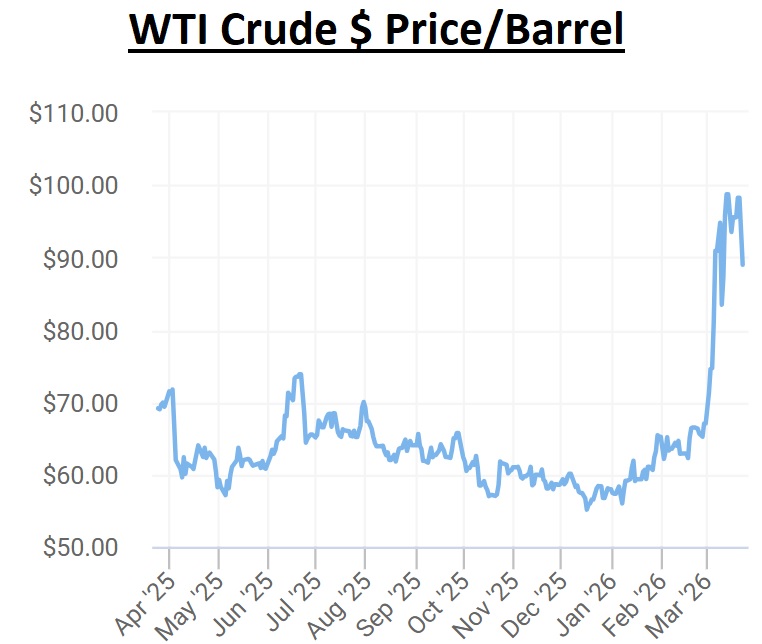
While there’s a lot happening in the world right now, current headlines are dominated by the war in Iran. This war has plunged the whole Middle East region into uncertainty. Bombs are falling on military facilities, bombs are falling on schools, bombs are falling on energy production facilities, and bombs are falling on oil transportation infrastructure. Who would ever have thought conflict here could directly lead to a surge in energy prices (from 1/1/26 to 3/23/26 the price of a barrel of oil (WTI) has surged from $57/barrel to $89)? There’s lots terrible about war of any kind, but the focus in this post is on travel costs specifically.
Inelastic goods
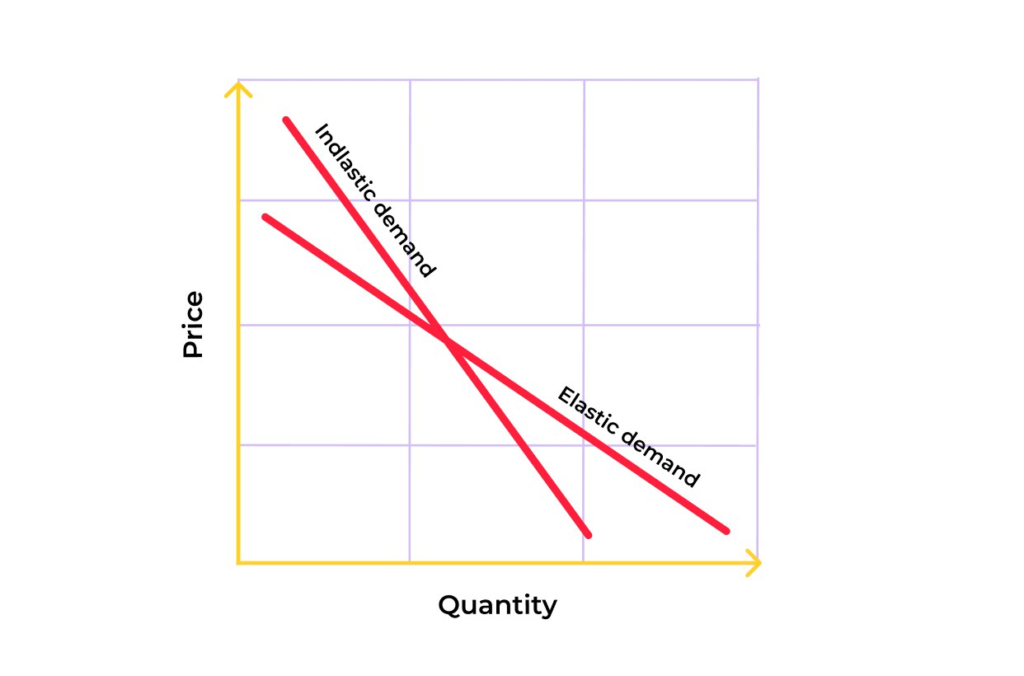
Goods in the marketplace typically operate in a way where price meaningfully impacts demand for a good. Higher prices? Lower demand. Goods elasticity measures how responsive goods are to changes in price. Sometimes consumers may be able to substitute (ex. I’ll eat an apple instead of a pear) and so price meaningfully impacts demand or otherwise forgo purchasing (good is elastic). Sometimes consumers are not able or willing to make a meaningful or quick change in consumption (ex. the price of gas goes up from $3 to $5), and eat the increased cost without meaningful change in behavior (good is inelastic).
Oil is highly inelastic commodity. Our system is designed to consume and our transportation and industrial patterns need a steady flow of oil. The Dallas Federal Reserve estimates that a 10% increase in price results in a mere 2% reduction in demand in the short term (see this study). That means that drop in consumer demand from higher prices is unlikely to be what drops prices (instead, increased production will.)
If you’re interested in geeking out on Economics, this article’s got a lot going for it and makes a good read.
What’s happening in Iran?
- Iran production impacts – Iran makes up a small but substantial portion of the global production, at 3.3-4M barrels/day or ~4% of global production. War means that production is effectively unavailable. Some of Trump’s policies to allow 100M+ barrels on the water for sale make that a bit more up on the air.
- Shipping blocked – Iran holds substantial military leverage over the Straight of Hormuz, where ~20M barrels/day or ~20% of global production is shipped. They have and are threatening to attack vessels without authorization from Iran. This has effectively cut 20% of global production off from world markets.
- Damaged infrastructure – Iran and US/Israel have and/or are damaging energy production infrastructure in the region, impacting future capacity. This means future prices are impacted as the scarcity observed today will only increase as more and more production becomes unavailable.
What does that mean for travel?
Oil prices are up. Oil is critical input for jet fuel. Oil costs more means jet fuel costs more. Fuel costs for major airlines are substantial. Looking at Delta Airlines, 2025 fuel cost was $9.8B on revenues of $57.5B and expenses of $51.1B. That means that fuel costs make up $9.8B/$51.1B (19%) of expenses or $9.8B/$57.5B (17%) of revenues.
Oil prices as of today are up 56% so far this year. That is likely to lead to a similar rise in fuel prices. That, absent pricing increases from airlines, will lead to a substantial drop in profitability. What that means is airlines are going to increase prices to absorb increased costs of service.
What should you do about it?
Move quick. If you have upcoming travel and haven’t bought your tickets, buy them now. My swag guesstimate is that we’ll see prices trickle up 10-15% over the coming months (~20% of expenses as fuel cost, which has seen an increase from ~$65 in 2025 to ~$90 currently), and take longer still to drop once oil prices do drop back down.
Post-ending gif
